Buy gkstudio.eu ?
We are moving the project
gkstudio.eu .
Are you interested in purchasing the domain
gkstudio.eu ?
domain@kv-gmbh.de · 0541-91531010
Buy gkstudio.eu ?
What are the principles of representation in art?
The principles of representation in art refer to the techniques and methods used by artists to depict subjects in a realistic or abstract manner. These principles include proportion, perspective, balance, harmony, contrast, and emphasis. Artists use these principles to create a visual language that communicates their ideas and emotions effectively to the viewer. By understanding and applying these principles, artists can create compelling and engaging artworks that resonate with their audience. **
Which app is good for fashion design or graphic design?
For fashion design, apps like Adobe Illustrator, Procreate, and SketchBook are popular choices due to their advanced drawing and design capabilities. These apps offer a wide range of tools and features specifically tailored for creating fashion illustrations and designs. For graphic design, apps like Adobe Photoshop, Canva, and Affinity Designer are highly recommended for their versatility in creating various types of graphic designs, including logos, posters, and social media graphics. These apps provide powerful editing tools, templates, and design assets to help users bring their creative ideas to life. **


Similar search terms for Representation
Top-Angebote
Products related to Representation:




-
What is the polar representation of a Cartesian representation?
The polar representation of a Cartesian representation is a way of expressing a point in the Cartesian plane using polar coordinates. In the polar representation, a point is described by its distance from the origin (r) and the angle it makes with the positive x-axis (θ). This is in contrast to the Cartesian representation, which describes a point using its x and y coordinates. The polar representation provides a different way of understanding and visualizing points in the plane, and it can be useful in certain mathematical and scientific contexts. **
-
Which representation method?
The representation method that should be used depends on the specific data being analyzed and the goals of the analysis. For categorical data, bar graphs or pie charts are commonly used to show the distribution of different categories. For numerical data, histograms or box plots can be used to visualize the distribution and central tendency of the data. Scatter plots are useful for showing the relationship between two numerical variables. Ultimately, the best representation method is one that effectively communicates the key insights from the data in a clear and concise manner. **
-
Which topics are well-suited for representation in conceptual art?
Conceptual art is well-suited for representing abstract or complex ideas, such as social or political issues, philosophical concepts, and personal experiences. It is also well-suited for exploring the boundaries of art itself, questioning the nature of art and the role of the artist. Additionally, conceptual art can effectively represent the intangible or ephemeral, such as emotions, thoughts, and sensations. Overall, conceptual art is best suited for topics that require a deeper level of contemplation and interpretation. **
-
What is the linear factor representation and the polynomial representation?
The linear factor representation of a polynomial is a way of expressing the polynomial as a product of linear factors. For example, the linear factor representation of the polynomial x^2 - 4 is (x-2)(x+2). This representation helps in finding the roots of the polynomial. The polynomial representation is the standard way of expressing a polynomial as a sum of terms, each containing a variable raised to a power. For example, the polynomial representation of x^2 - 4 is x^2 - 4. This representation helps in performing operations like addition, subtraction, multiplication, and division of polynomials. **

Is the standard representation the same as the exponential representation?
No, the standard representation and the exponential representation are not the same. The standard representation of a number is typically in the form of a decimal or fraction, while the exponential representation is in the form of a number raised to a power. For example, the standard representation of 100 is simply "100," while the exponential representation is "10^2." These two representations convey the same value but are written in different forms. **
What is the difference between abstraction and non-representation in art?
Abstraction in art involves simplifying or distorting the representation of real objects or scenes, often to the point of being unrecognizable. It focuses on conveying emotions, ideas, or concepts through the use of color, form, and composition. On the other hand, non-representation in art refers to the complete absence of recognizable objects or scenes. It involves creating art that does not depict anything from the real world and instead focuses on purely abstract or non-representational forms, shapes, and colors. In summary, abstraction involves a distorted representation of real objects, while non-representation involves the absence of recognizable objects altogether. **
Top-Angebote
Products related to Representation:
-
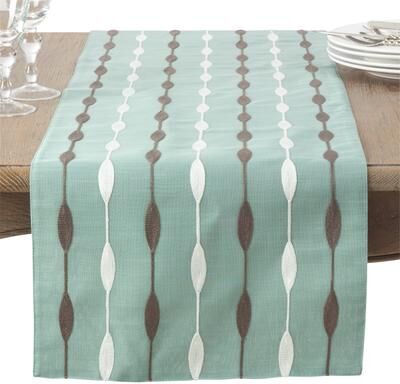
Saro Lifestyle Modern Embroidered Design Table RunnerBring style and dimension to your tabletop with this cute, charming Embroidered Table Runner. Featuring distinct embroidery and contrasting colors and tones, this unique table runner adds identity and individuality to your décor.36,51 $*Shipping: 0,00 $Secure redirect to the provider
-
What are the principles of representation in art?
The principles of representation in art refer to the techniques and methods used by artists to depict subjects in a realistic or abstract manner. These principles include proportion, perspective, balance, harmony, contrast, and emphasis. Artists use these principles to create a visual language that communicates their ideas and emotions effectively to the viewer. By understanding and applying these principles, artists can create compelling and engaging artworks that resonate with their audience. **
-
Which app is good for fashion design or graphic design?
For fashion design, apps like Adobe Illustrator, Procreate, and SketchBook are popular choices due to their advanced drawing and design capabilities. These apps offer a wide range of tools and features specifically tailored for creating fashion illustrations and designs. For graphic design, apps like Adobe Photoshop, Canva, and Affinity Designer are highly recommended for their versatility in creating various types of graphic designs, including logos, posters, and social media graphics. These apps provide powerful editing tools, templates, and design assets to help users bring their creative ideas to life. **
-
What is the polar representation of a Cartesian representation?
The polar representation of a Cartesian representation is a way of expressing a point in the Cartesian plane using polar coordinates. In the polar representation, a point is described by its distance from the origin (r) and the angle it makes with the positive x-axis (θ). This is in contrast to the Cartesian representation, which describes a point using its x and y coordinates. The polar representation provides a different way of understanding and visualizing points in the plane, and it can be useful in certain mathematical and scientific contexts. **
-
Which representation method?
The representation method that should be used depends on the specific data being analyzed and the goals of the analysis. For categorical data, bar graphs or pie charts are commonly used to show the distribution of different categories. For numerical data, histograms or box plots can be used to visualize the distribution and central tendency of the data. Scatter plots are useful for showing the relationship between two numerical variables. Ultimately, the best representation method is one that effectively communicates the key insights from the data in a clear and concise manner. **
Similar search terms for Representation
-
Saro Lifestyle Modern Embroidered Design Table RunnerBring style and dimension to your tabletop with this cute, charming Embroidered Table Runner. Featuring distinct embroidery and contrasting colors and tones, this unique table runner adds identity and individuality to your décor.48,49 $*Shipping: 0,00 $Secure redirect to the provider
-
Which topics are well-suited for representation in conceptual art?
Conceptual art is well-suited for representing abstract or complex ideas, such as social or political issues, philosophical concepts, and personal experiences. It is also well-suited for exploring the boundaries of art itself, questioning the nature of art and the role of the artist. Additionally, conceptual art can effectively represent the intangible or ephemeral, such as emotions, thoughts, and sensations. Overall, conceptual art is best suited for topics that require a deeper level of contemplation and interpretation. **
-
What is the linear factor representation and the polynomial representation?
The linear factor representation of a polynomial is a way of expressing the polynomial as a product of linear factors. For example, the linear factor representation of the polynomial x^2 - 4 is (x-2)(x+2). This representation helps in finding the roots of the polynomial. The polynomial representation is the standard way of expressing a polynomial as a sum of terms, each containing a variable raised to a power. For example, the polynomial representation of x^2 - 4 is x^2 - 4. This representation helps in performing operations like addition, subtraction, multiplication, and division of polynomials. **
-
Is the standard representation the same as the exponential representation?
No, the standard representation and the exponential representation are not the same. The standard representation of a number is typically in the form of a decimal or fraction, while the exponential representation is in the form of a number raised to a power. For example, the standard representation of 100 is simply "100," while the exponential representation is "10^2." These two representations convey the same value but are written in different forms. **
-
What is the difference between abstraction and non-representation in art?
Abstraction in art involves simplifying or distorting the representation of real objects or scenes, often to the point of being unrecognizable. It focuses on conveying emotions, ideas, or concepts through the use of color, form, and composition. On the other hand, non-representation in art refers to the complete absence of recognizable objects or scenes. It involves creating art that does not depict anything from the real world and instead focuses on purely abstract or non-representational forms, shapes, and colors. In summary, abstraction involves a distorted representation of real objects, while non-representation involves the absence of recognizable objects altogether. **
* All prices are inclusive of VAT and, if applicable, plus shipping costs. The offer information is based on the details provided by the respective shop and is updated through automated processes. Real-time updates do not occur, so deviations can occur in individual cases. ** Note: Parts of this content were created by AI.